Life-Writing: Echoes of my spirit, land, and ancestors in a dwelling place within the Quilotoa Volcano in Ecuador
Author: David E. Cadena C.
Date: February 18, 2026
“In Quito, residents live among volcanoes and colonial-era churches and grow up sharing ancestral stories about this place, each carrying a rich family narrative. I hail from a family linked to two towns in Ecuador: Latacunga and Ambato. Both cities embody my heritage and are strongly connected to indigenous roots and education” (Cadena, 2025a, p. 2-3).
In the town of Latacunga and its surrounding area are the volcanoes Cotopaxi and Quilotoa. In the southeast, the neighbouring province of Tungurahua is home to the Tungurahua volcano, and in the northeast, the neighbouring province of Pichincha is home to the Pichincha volcano. The majestic volcano Chimborazo, which is the main character in Ecuadorian Indigenous storytelling, is located south of the three previously mentioned provinces and in central Ecuador.
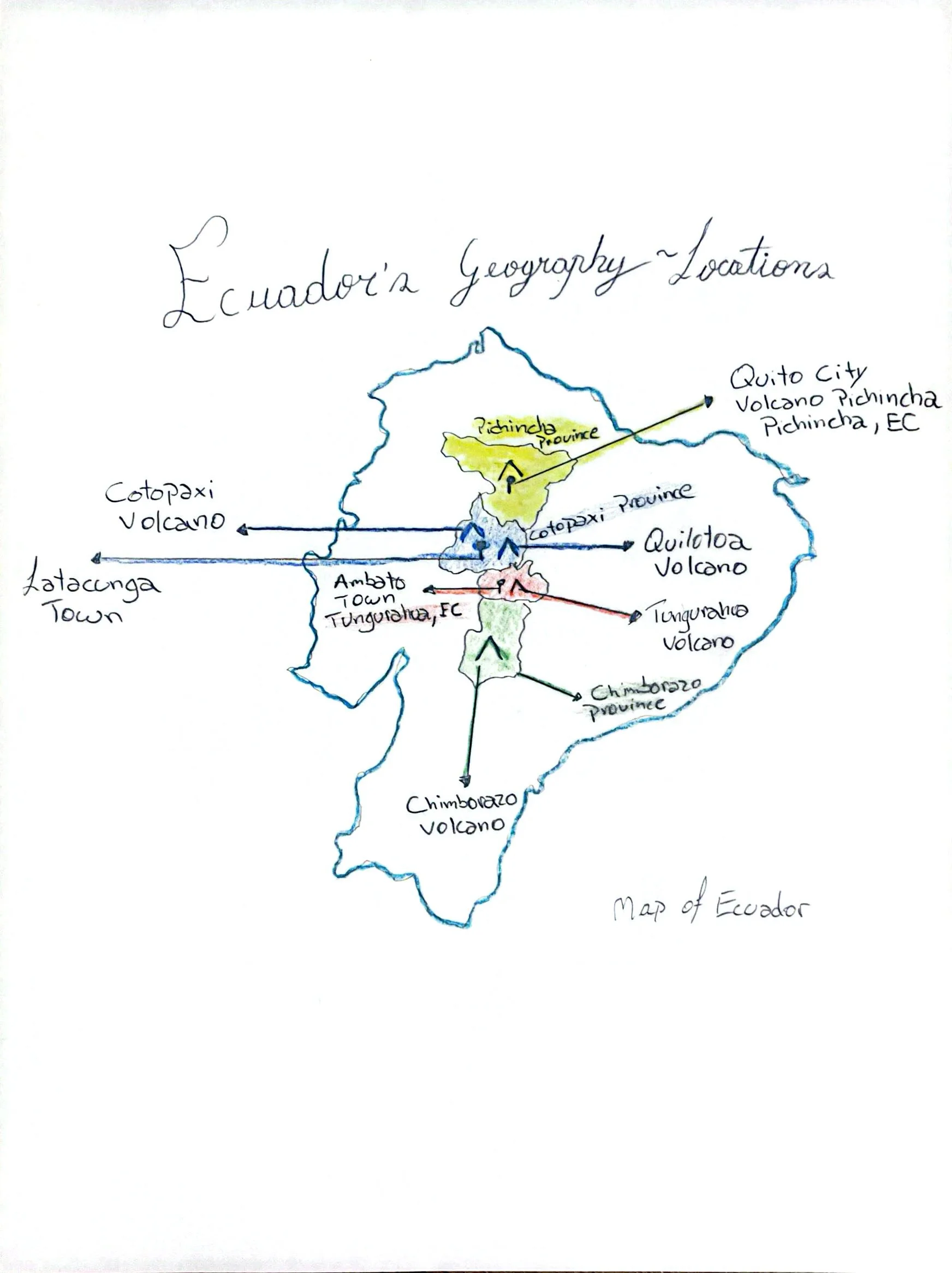
Figure 1: Ecuador's Map [Photograph by the Author]
Echoing in the deep recesses of my memory, I come back to a dwelling place of reflection –the shores of the lake within the crater of the Quilotoa volcano in Ecuador. Through the oral tradition, I shared the previous work “Layers of Being: An Educational and Social Autobiography Through Ontology, Epistemology, and Axiology,” which tells the story of the volcanos cosmovision.
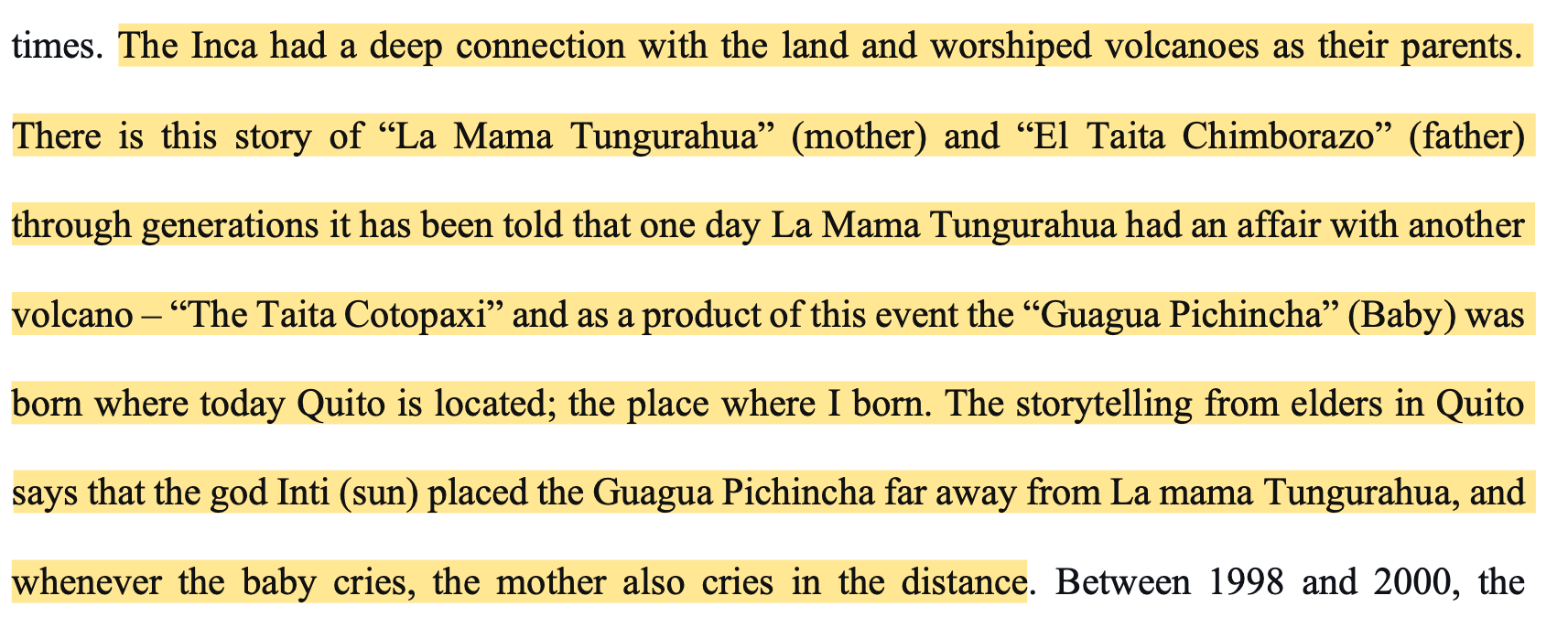
Figure 2: Extract from Cadena, D. E. (2025 b "Layers of Being: An Educational and Social Autobiography Through Ontology, Epistemology, and Axiology" (p.2).
The story’s aftermath of the war between Taita Cotopaxi and Taita Chimborazo, which ended when Mama Tungurahua chose Taita Chimborazo, leaving Taita Cotopaxi in deep sorrow, far from his love and the Guagua Pichincha. Cotopaxi’s younger brother, Quilotoa, rebelled among the Andes and erupted fire across the sky to such fury that it collapsed their crater. The peace returned to the region, though the landmark in Cotopaxi province stood as a reminder of Quilotoa peak's absence. As a loyal brother, Quilotoa promised to stay silent, and its collapsed crater became a place where Taita Cotopaxi’s tears fell, making it born as an emerald-like lake. Echoing in the deep recesses of my memory, I come back to a dwelling place of reflection –the shores of the lake within the crater of the Volcano Quilotoa in Ecuador. The photograph taken in 2016 is the artifact from which my life-writing stems.
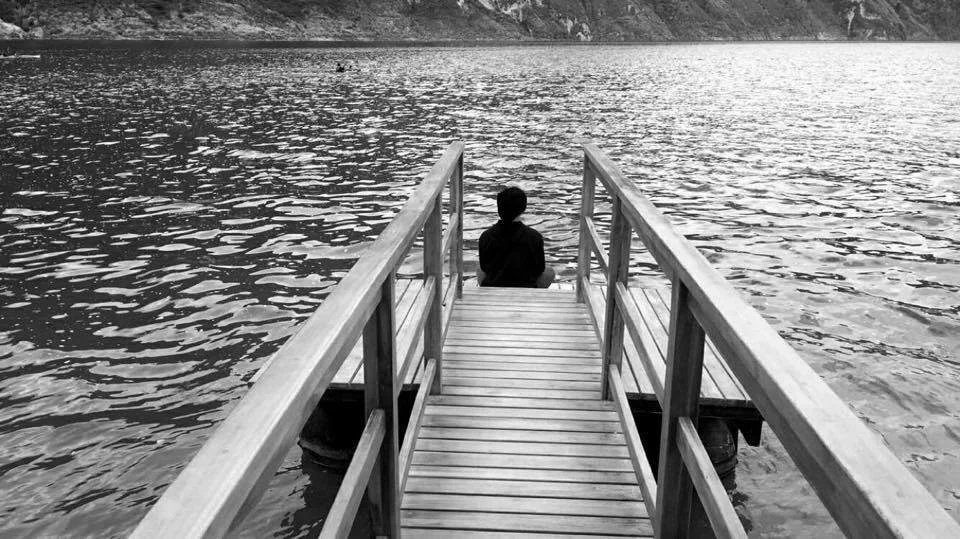
Figure 1: Life-Writing Artifact [Photograph 2016] - David's Dwelling at The Shores of Quilotoa Lake, Ecuador
The hollow crater draws parallel to the hollow of my spirit from immigrating and growing in different places. This story is more than a myth; it is a necessity for survival. The writing process follows the path from Research That Matters: Finding A Path with Heart, where it echoes “[y]ou must explore and write the suffering and grief that comes from living in an imperfect world. But you must also make peace with the past and the present, and live into the future…Through stories, teachers/researchers record significant events, and like the originative meaning of re-cord, through stories those significant events are passed back through the heart again…The path with heart may be important, at least in part, because it does not veer away from suffering, whether it is our own or others” (Chambers, 2004, p.11-13). By dwelling here, I am caring for my own decolonial spirit, allowing this "path with heart" to transform the historic hollows of my past—the memories of personal trauma and lived experiences —into a vessel for pedagogical truth.
“Being a mestizo [means], I carry on my heritage [braided across] [I]ndigenous and Spanish background…” (Cadena, 2025a, p. 5). My identity complexity explores the layers of my roots and lived experiences within the settler-migrant paradox in Canada. This place in the Quilotoa volcano maintains me grounded and reminds me that a hollowed heart can become a source of medicine. My ancestors’ cosmovision, passed down through the oral tradition, has evolved into the literary genre of “magic realism” in Latin America. As quoted by my High School Spanish Literature teacher, “writers in South America have transformed deeply painful stories into fantasy-themed stories that braid with our collective trauma into words that find their way to our literature.”
My lived stories and the echoes of my Ecuadorian roots sit within academic contexts that embrace the teachings of scholars such as Ted Aoki, Paulo Freire, and Dwayne Donald. My stories and spirit find a resting place in the present and future within the land where I continue my education today – Kamloops, alongside the stories and history of the Secwépemc Indigenous Community.
“[C]urriculum-as-plan are the works of curriculum planners…If the planners regard teachers as essentially installers of the curriculum, implementing assumes and instrumental flavour…The other curriculum world is the situated world of curriculum-as-lived that Miss O and her pupils experience…Miss O knows their uniqueness from having lived daily with them. And she knows that their uniqueness disappears into the shadow when they are spoken of in the prosaically abstract language of the external curriculum planners…[Dwelling in the zone of between] is the tensionality that allows good thoughts and actions to arise when properly tensioned chords are struck…” (Aoki, 2004, p.160-162).
Donald (2012) mentions, “One central goal of doing Indigenous Métissage is to enact ethical relationality as a philosophical commitment. Ethical relationality is an ecological understanding of human relationality that does not deny difference, but rather seeks to understand more deeply how our different histories and experiences position us in relation to each other… [Donald (2012) recalls the ideas from (Dickanson 1985, 21),] Métissage, from which the Canadian word ‘Métis’ is derived, is a word of French language origin, loosely translated into English as ‘crossbreeding,’ that originally referred to racial mixing and procreation in derogatory terms...I use artifact in a socio-cultural and historical sense to denote a vestige fecund with contested interpretations of culture and identity, rather than in an archaeological sense…” (Donald, 2012, p.535-542).
“In Pedagogy of the Oppressed , Freire critiques what he labels the “banking system of education,” wherein the teacher narrates and the students listen, memorize words and concepts of little relevance to their lives, and regurgitate the information to excel on an examination” (Duncan, 2022, p.3).
As I move forward in my academic formation, I am developing my dream to pursue a PhD in Social Justice at the University of British Columbia and to work in research to braid public policy and social justice into my academic work. I end up the life writing today, quoting myself from my Self-reflection while completing my formation as an English language teacher .“Reaching adulthood in Canada was a journey filled with a variety of experiences which reshaped my identity…During my early twenties, I lived in a world of social distancing and seeking clarity on my identity…The lived experiences in Canada have] reshaped my identity since, paradoxically, being here and listening to [I]ndigenous stories has healed cultural wounds … related to my Ecuadorian [I]ndigenous background” (Cadena, 2025a, p. 5-6).
References
Aoki, T. T. (2004). Teaching as indwelling between two curriculum worlds. In W. F. Pinar & R. L. Irwin (Eds.), Curriculum in a new key: The collected works of Ted T. Aoki (pp. 159–165). Routledge.
Cadena, D. E. (2025) a. Layers of being: An educational and social autobiography through ontology, epistemology, and axiology [Unpublished manuscript]. Thompson Rivers University.
Cadena, D. E. (2025) b. [TESOL intercultural communication studies:] Self-identity reflection assignment [Unpublished manuscript]. Thompson Rivers University.
Chambers, Cynthia. “Research That Matters: Finding A Path with Heart.” Journal of the Canadian Association for Curriculum Studies 2, no. 1 (2004): 1–19.
Dickason, O. 1985. From ‘one Nation’ in the Northeast to ‘New Nation’ in the Northwest: A look at the emergence of the métis. In The new peoples: Being and becoming Métis in North America, ed. J. Peterson and J. Brown, 19–36. Winnipeg: University of Manitoba Press.
Donald, D. T. (2012). Indigenous métissage: a decolonizing research sensibility. International Journal of Qualitative Studies in Education, 25(5), 533-555.
Duncan, J. (2022). Pedagogy of the Oppressed by Paulo Freire. Salem Press Biographical Encyclopedia.